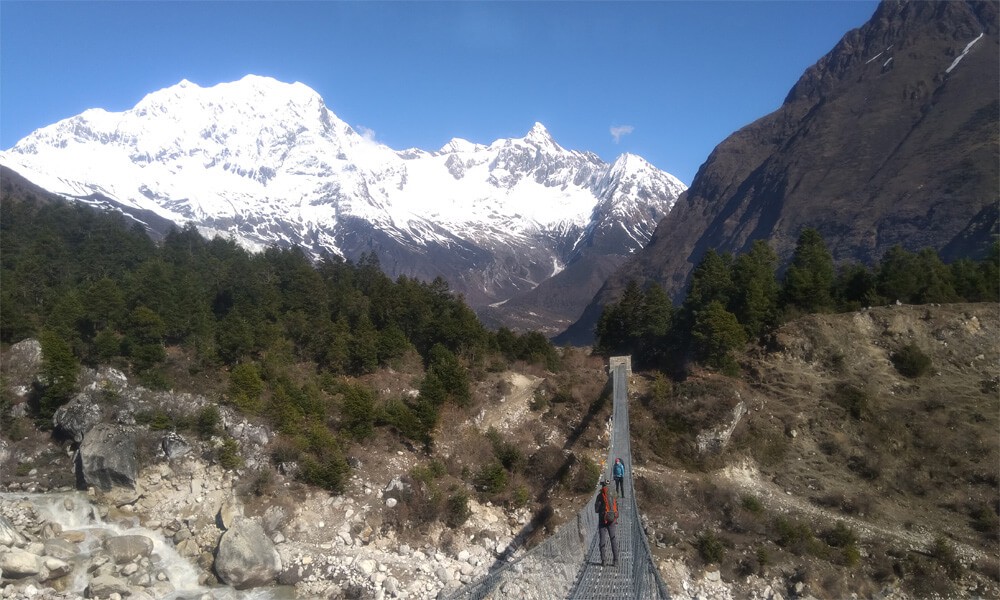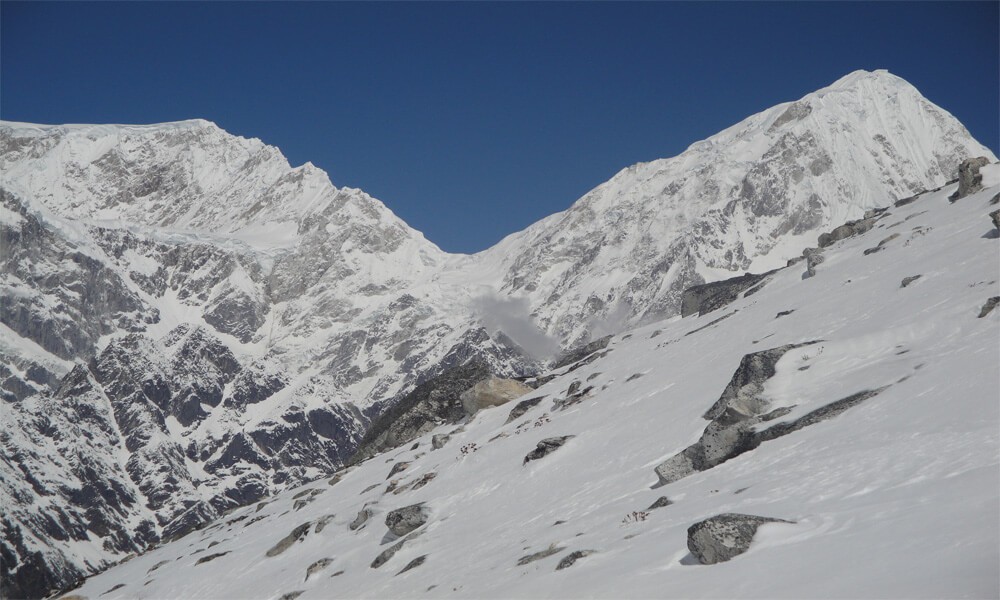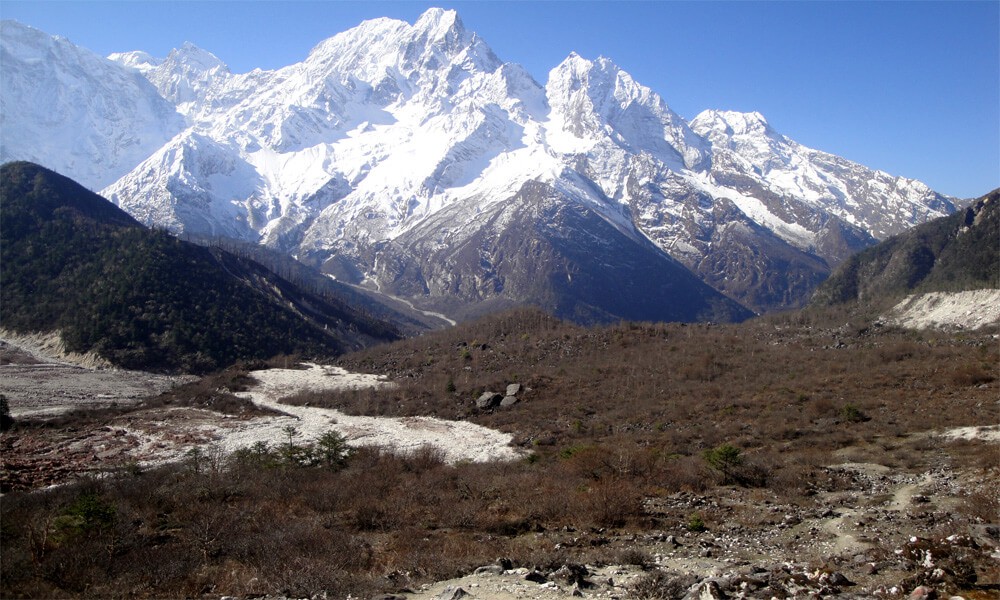




A Quick Glimpse
- Maximum Elevation: 5,106 meters / 16,752 feet
- Difficulty Level: Moderate to Strenuous
- Duration: 11 Walking Days
- Starting Point: Kathmandu (Drive to Machha Khola)
- Best Seasons: September to December and March to May
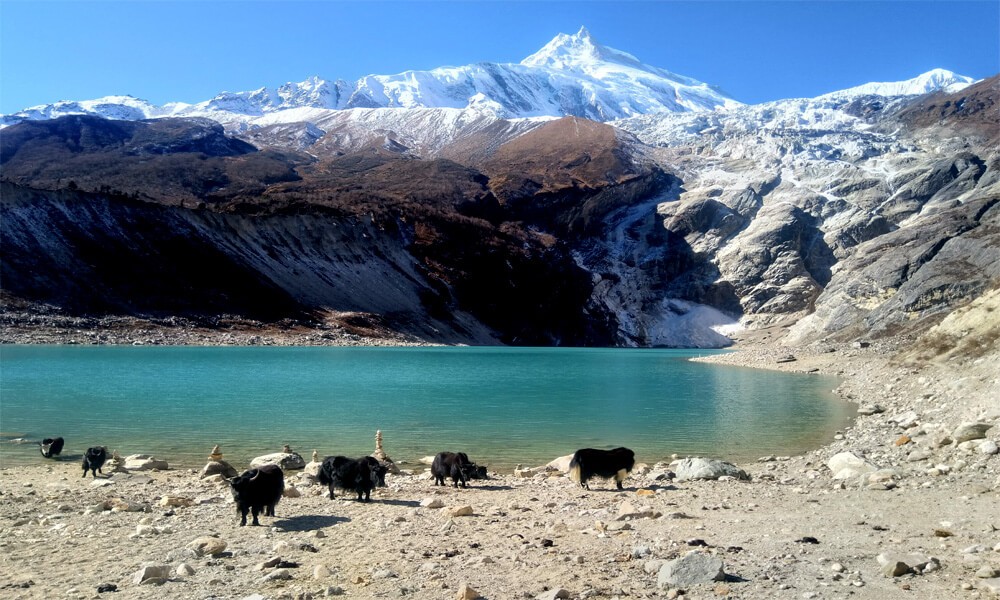
- Key Highlights: Waterfalls, Traditional Villages, Cultural Monuments. Wildlife, Birendra Lake, View from Pungen Gumba, Larke La Pass, High Mountain Region’s Lifestyle
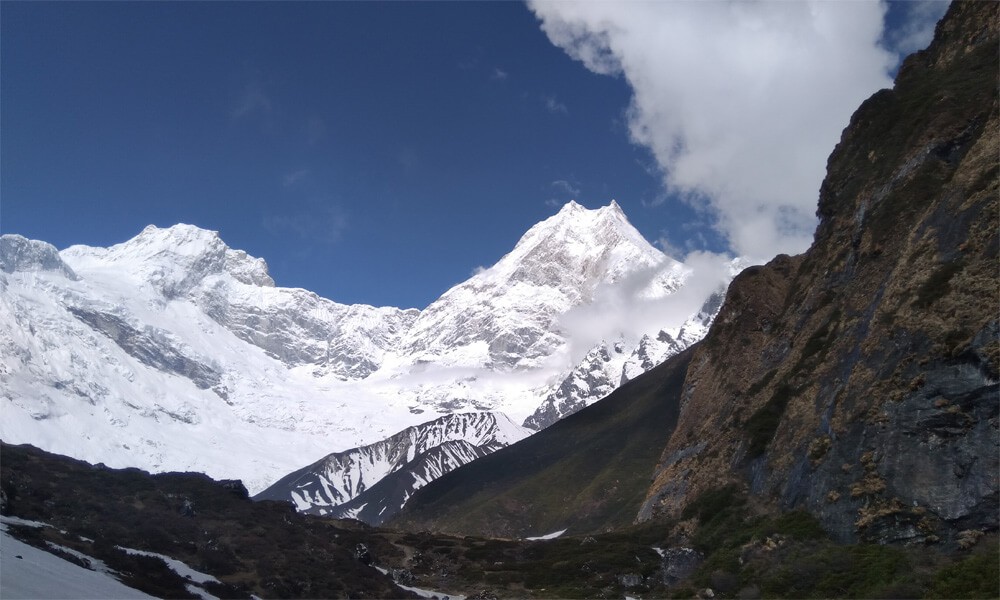
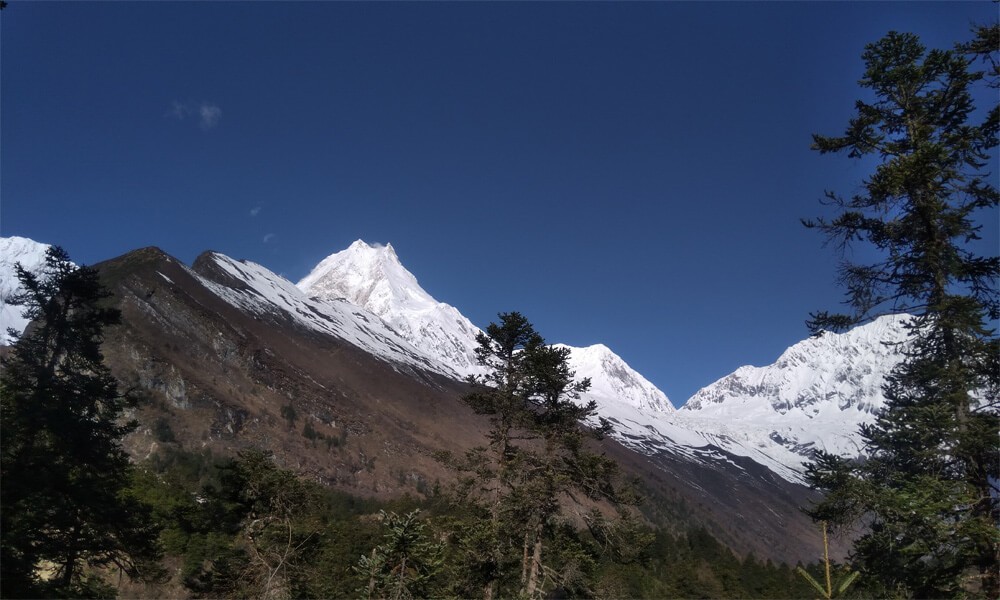
- Mountain Views: Manaslu, Ganesh Himal, Himal Chuli, Ngadi Chuli, Nimjung, Himlung, and more
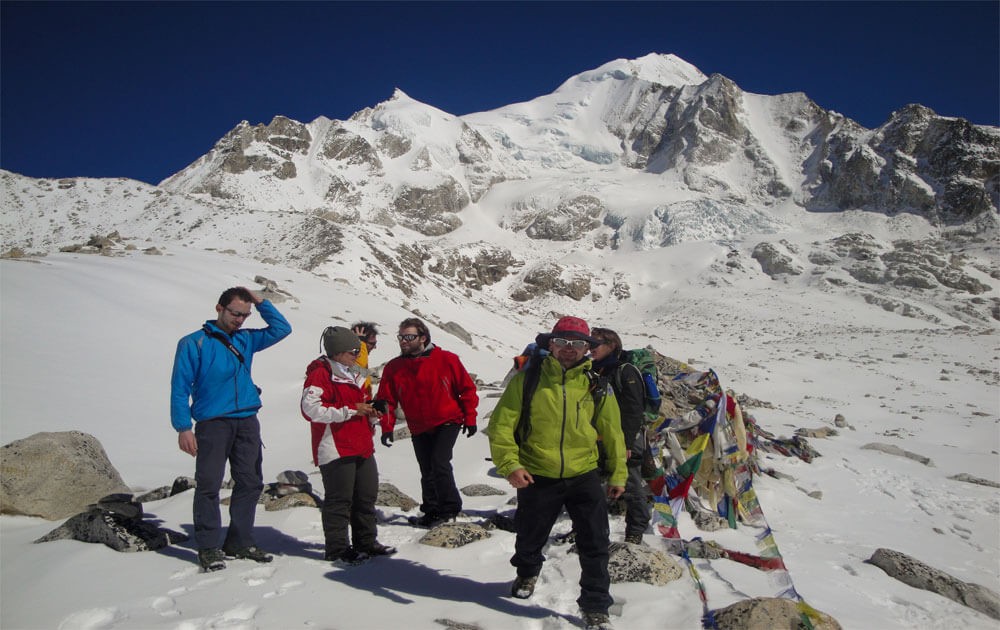
The Manaslu Circuit Trek is an 11- to 14-day moderate-to-strenuous mountain trip in Nepal’s Manaslu Region, which requires restricted-area entry permits, including the Manaslu Conservation Area (MCA) and Annapurna Conservation Area (ACA) permits. You must have a licensed guide for the trek, and the cost starts at 1090 USD per person for group trekkers and 1190 USD for a single trekker.
Namaste! My name is Rajesh Thapaliya. I am a trekker in Nepal’s Himalayas and often work as a tour operator and guide. When I started the Manaslu Circuit in May 2026, I expected an adventure, but the experience of trekking around the world’s eighth-highest mountain was even more amazing than I imagined. Over 12 days, I covered about 175 kilometers on beautiful, remote tea-house trails and finished with the tough but rewarding Larkya La Pass at 5,106 meters. Since this area is restricted, I needed a licensed guide and special permits. Having local guidance made me appreciate this wild and peaceful part of the Himalayas even more.
Below, I’ll share important details about my experiences, how I felt during the trek, and my safety tips for travelers.
The Manaslu Circuit Trek is a mountain adventure in Nepal’s Manaslu Region. This package includes an 11-day trek, plus three extra days for preparation, permits, and a Kathmandu city tour, making it a 14-day trip from arrival to departure. Most trekking days are in restricted areas, but the first and last two days are outside these zones.
Many trekkers wonder why Manaslu is a restricted area. The Nepal Government limits the number of trekkers to help preserve local culture, protect natural resources, and maintain border security with Tibet, since the area is easily accessible. Until now, solo trekkers could not get permits, but starting in March 2026, single trekkers can get a permit through a registered trekking company like Frolic Adventure, where I work.
Manaslu Circuit Trek Difficulty and Fitness Requirements
The Manaslu Circuit is an adventure trek in Nepal with moderate to challenging terrain. Anyone planning this trek should be well-trained in hiking and used to high altitudes.
The Manaslu Circuit starts at a low elevation, below 1,000 meters, and climbs gradually each day up to 5,106 meters (16,752 feet). The first three days, from Machha Khola to Namrung, are long—over 20 km each day. In my experience, slow walkers may find it hard to reach the camps on time.
High altitude is another challenge. Once trekkers go above 3,000 meters, in places like Lho Village, they may start to feel altitude sickness and have trouble breathing. If you have already trekked up to 4,000 meters before coming to Manaslu, it may not be a big problem.
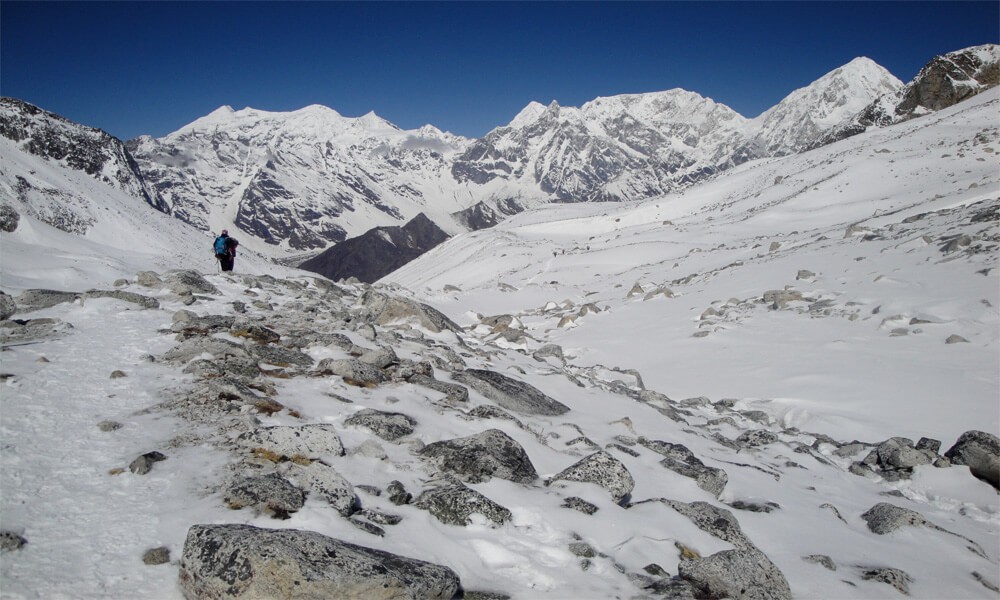
The third challenge is crossing Larke La (5,105 meters / 16,752 feet). If there is a lot of snow, walking can be tough, especially on the way down from the pass. I strongly recommend bringing spikes or crampons at any time of year for the Manaslu Circuit.
Crossing the pass means walking for a few hours in the dark and cold, which is also challenging. If you are a fast walker, you may need to follow the pace of those ahead in a single line, as the trail is usually too narrow to pass slower trekkers.
Best Time of Year to Trek to Manaslu Circuit
The best times to trek are autumn (September to November) and spring (March to May). Each season has its own pros and cons, which I’ll explain with a quick comparison.
| Autumn Season | Spring Season |
|
|
Pre-Monsoon Season (March to May)
March to May is spring in Nepal and usually the driest season. Still, you might get some light rain or hail in the lower areas and soft hail higher up. Rhododendrons bloom in the middle region, from about 2,000 to 3,500 meters. At higher elevations, small white and pink flowers appear in late spring. The ground in the high areas is covered with colorful flowers like Himalayan Primrose, making the scenery beautiful.
Spring temperatures are warm, so the lower regions at the start can get very hot, which may lead to dehydration from sweating. I recommend bringing electrolytes and drinking plenty of water. You can visit the peaceful Birendra Lake from Samagaun, but it stays frozen until mid-April. By late May, you might see some rain and clouds, which can affect mountain views.
Post Monsoon Season (September to November)
The post-monsoon season, from September to November, is autumn in Nepal. This is the most popular and busiest time for trekking. The best weather is usually from the second week of October through November, partly due to recent climate changes.
September was once dry, but in recent years, there has been heavy rain during this month (not according to any trusted sites like Wikipedia, but I am sharing what I have been experiencing for a few years). I recommend avoiding trekking in the rain. In the lower region during the first three days, there are many landslide areas where stones can fall, and trails may be damaged. Be very careful and watch for falling stones. The trail also follows the fast and deep Budhigandaki River. Heavy rain can make the path wet and slippery.
Winter Season (December to February)
December marks the start of winter and brings some of the best weather to the Manaslu region. If you don’t mind the cold and enjoy trekking in a quiet setting, I highly recommend visiting in December. The temperatures are manageable, and the skies are usually clear all day, giving you beautiful mountain views at sunrise and sunset.
January and February are much colder and can have heavy snowfall on some days, but the mountains are still bright and clear. I don’t recommend trekking during these months for everyone. However, if you are experienced in high mountains, have good warm gear, and take safety seriously, you can consider a winter trek on the Manaslu Circuit.
Why is the Manaslu area restricted?
There are three major reasons why the Manaslu area is listed as a restricted area of Nepal. Those three reasons are listed below for your clarification.
Border Security: There are some diplomatic matters between China and Nepal. Manaslu circuit is closed, and there is easy access to cross into the Tibet Autonomous State of China, which was an old trade route between Nepal and Tibet. China is aware that if there are anti-China activities, many people from all around the world could enter easily. Nepal Government should not allow any anti-China campaign in Nepal or through Nepal due to diplomatic friendship.
Cultural Prevention: Communities in Tsum, Nubri valleys, and the Manaslu Circuit route in upper Gorkha District of Nepal strictly practice Tibetan Buddhism and worship in a fully peaceful environment. If many tourists enter during worship, it may be disturbed. There are some ancient and valuable things in old monasteries inside the region. Not just anyone can enter if it is open for mass tourism, so to protect religious and cultural property, the region is restricted.
People in the region were shy and always seen as doubtful by strangers from other regions (even other regions of Nepal). To avoid disturbing locals, the government also decided to control entry for many people at the same time.
Environmental Conservation: Vegetation grows too slowly in the higher region of the Manaslu Region due to less rain and cold temperatures. If many people trek there every year, locals could deforest for fire to make the trekkers warm and cook food. But people are aware of the need to protect the forest and use gas to cook, gas heaters, and electric heaters to stay warm in some places.
There are wildlife like the snow leopard, which grow slowly. If many people actively trek closer to the villages, they can’t come to the lower areas to hunt for their food and have to stay away from the people in the higher areas, where they might not get enough to eat and then start being endangered.
Permit Required for Manaslu Circuit
After knowing about the restricted area, you must have the restricted area entry permit for the Manaslu Circuit. The purpose of a compulsory restricted area entry permit is to control the larger number of people in the region.
The Manaslu Circuit is not just one of Nepal's restricted areas; it is also a conservation area for wildlife and nature, controlled by the National Trust for Nature Conservation (NTNC). Trekkers must have an entry permit for the Manaslu Conservation Area (MCA).
The third required permit for this trek is the Annapurna Conservation Area (MCA). You connect with the Annapurna Circuit trekking trail in Dharapani, where the Annapurna Conservation begins. You must obtain an Annapurna Conservation Area permit, which is why you must have the entry permit for the Annapurna.
The fourth permit for the Manaslu Trek is the Chum Nubri Rural Municipality entry permit issued by the local government. It costs 1000 NPR per trekker, except for Nepalese citizens.
- Restricted Area Entry Permit: It costs 75 USD from December to August and 100 USD from September to November for the first seven days. Then 15 USD per day in autumn and 10 USD for the rest of autumn for longer stays. The Nepal Immigration Office in Kalikasthan, Kathmandu, and Pokhara issues the permit. The restricted area permit fees apply for all nationalities with the same fare, except for local trekkers from Nepal.
- MCA Permit: It costs 3000 NPR for a specific route mentioning entry and exit dates and locations. NTNC offices in Kathmandu and Pokhara issue this permit.
- ACA Permit: It costs 3000 NPR even if you check in and out at the same checkpoint in Dharapani. If you have time to go over Thorong La Pass while combining the Annapurna Circuit, the most important thing to consider is making sure the permit mentions the exit point Jomsom with the exact expiry date. ACA permit is also issued from NTNC offices in Kathmandu and Pokhara.
- Chum Nubri Rural Municipality Permit: It costs 1000 NPR and can be obtained in Jagat on the second day of the trek.
Is a Guide Compulsory for Manaslu Trek?
Yes, a licensed guide is mandatory for Manaslu Trek. No individual trekker can go without a guide due to the restricted area. A guide represents the government as a responsible citizen of Nepal. The government strictly applies a mandatory guide requirement to control any illegal or anti-government activities by trekkers.
A single trekker would not get restricted area entry permit until March 2026. In March 26 2026, the Nepal Immigration Office will issue permission to enter for a single trekker too. Hence, a porter is not compulsory, but it is one of the long and adventurous treks in Nepal with a high pass, Larke La over five thousand meters and long trekking camps. If you hire a porter, it will be beneficial for your successful trekking of the Manaslu Circuit.
How Much Does the Manaslu Trek Cost?
I am offering 1190 USD for our package according to the mentioned inclusions for a single trekker, which includes three nights' accommodation in a 3-star category hotel with breakfast, one day Kathmandu Tour, all permits, standard meals and accommodation in the mountains, local available public sharing transportation, and a few more services. However, the cost for the Manaslu trek varies based on the service, number of days, and group size.
Some trekkers may look for low-budget trekking options that cut out services, while others want upgraded accommodation in Kathmandu and private transport. We at Frolic Adventure are open to discussing price and services so we can create a customized trekking itinerary for Manaslu according to the visitor’s requirements.
We also offer special discounts for group bookings as mentioned below:
- 1 Trekker – 1190 USD
- 2-4 Trekkers – 1090 USD per person
- 5-10 Trekkers – 1050 USD per person
Breakdown Cost for Manaslu Circuit
Transport Cost
- Kathmandu to Machhakhola in public bus: 15 USD per person
- Kathmandu to Machha Khola Private Jeep: 250 USD
- Tilje to Besisahar Sharing Jeep: 30 USD per person
- Tilje to Besisahar Private Jeep: 200 USD
- Besisahar to Kathmandu Tourist Bus: 15 USD
- Besisahar to Kathmandu Public Bus or Van: 10 USD
- Besisahar to Kathmandu Private Jeep: 170 USD
Food Cost
- 10-15 USD per meal
Drinks, Hot Shower, and Charging Cost
- 10-15 USD per day
Accommodation Cost
- 5-7 USD per night
Permit Cost
- Restricted Area Permit: 100 USD in autumn and 75 USD December-August for a week
- MCA Permit: 3000 NPR
- ACA Permit: 3000 NPR
- Chum Nubri Rural Municipality Permit Cost: 1000 NPR
Guide Cost
- 25 USD per day
Porter Cost
- 18 USD per day
In addition to the costs listed above, remember to budget for your equipment, any shopping you do in the region, personal travel insurance, city expenses, and tips for your guide, porter, and driver if you use private transport.
Trek Itinerary of Manaslu Circuit
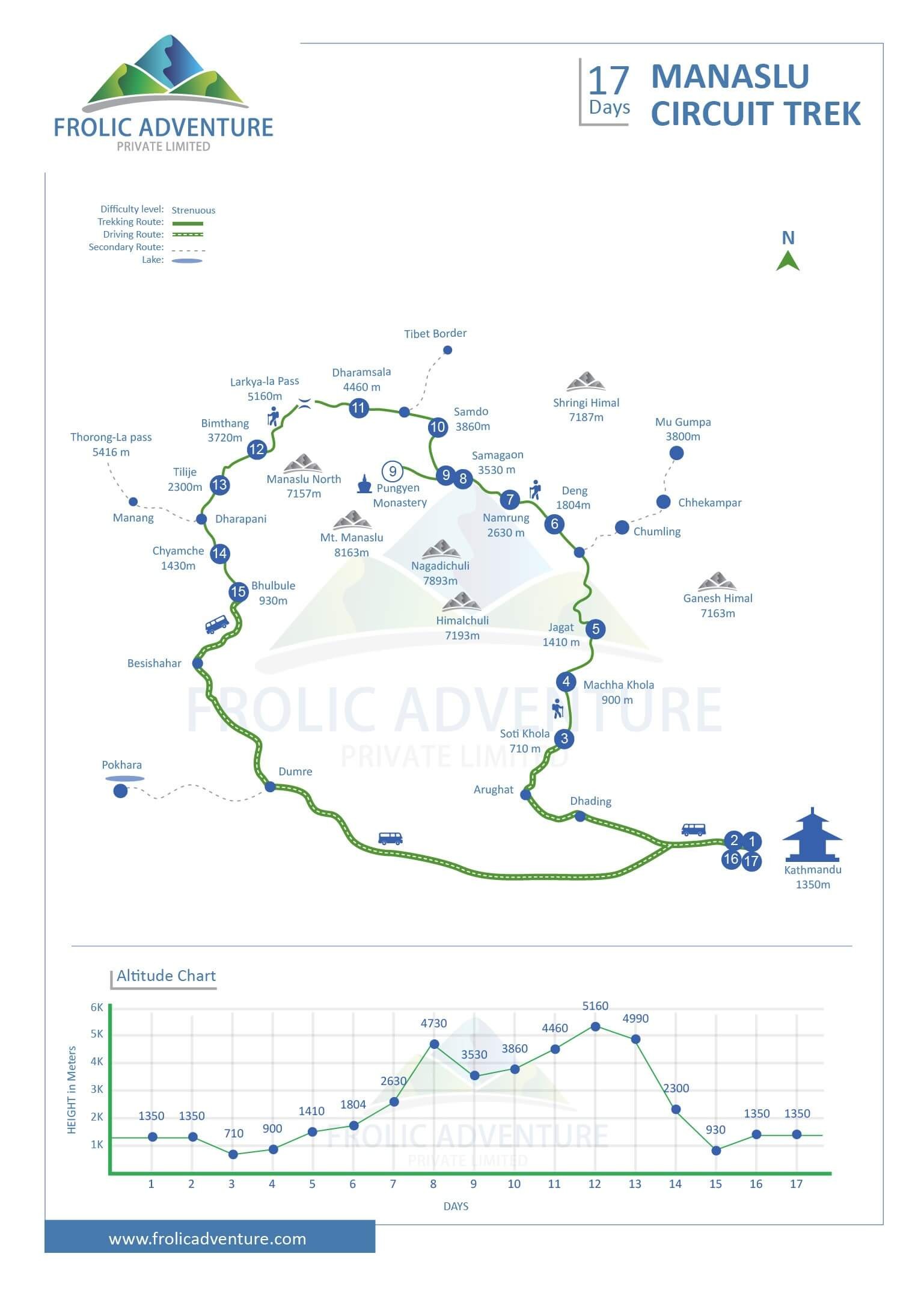
The actual 11-day trek itinerary of the Manaslu Circuit I have set in this package, from Nepal entry to departure, begins from Machha Khola after a long 7-8 hours drive from Kathmandu.
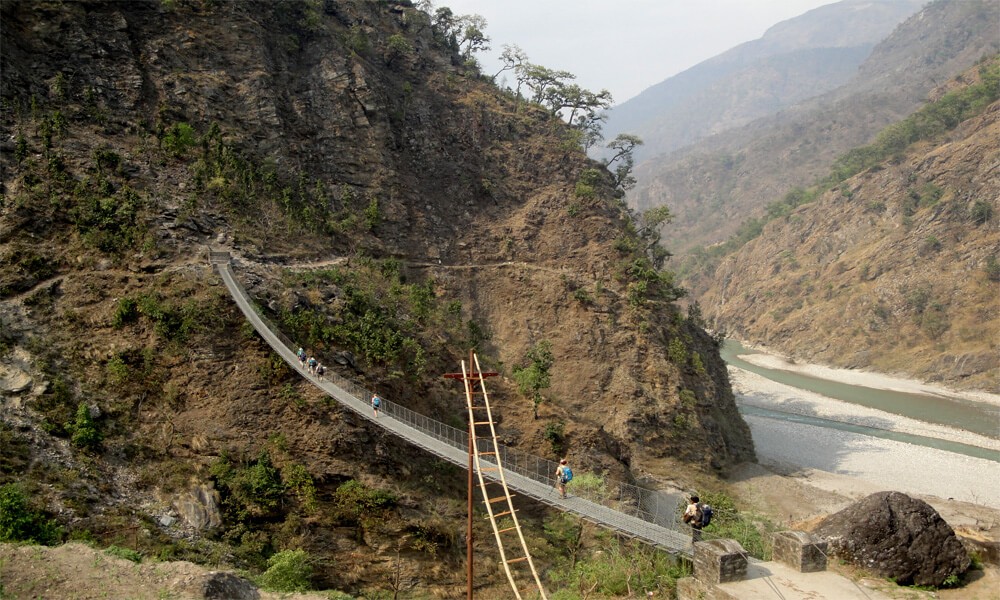
You will stay in Machha Khola overnight on a hillside road after a long and tiring day, and then start walking from the second day of your departure from the city. You will follow the Budhi Gandaki River, pass traditional villages, see Nepal’s country lifestyle, and see lots of rice fields.
You will be walking in a sub-tropical climate for the first two days of the trek, and then reach an alpine mountain climate.
The walking hours for the first three days of the trek are long, which is more than 20 km each day. However, you reach a higher elevation of 3,500 meters in Syala; the trekking camps are shorter due to the high altitude risk.
The most adventurous part of the trek is crossing over Larke La, which is 5,106 meters, with long ascents and descents. Also, you must start your journey to cross the Larke Pass very early in the morning before daylight. I have mentioned the day-to-day itinerary of the Manaslu Trek Below, which can help with understanding the elevation, walking hours, and places of stay.
- Day 01: Arrival in Kathmandu [1,350 m / 4,430 feet.]
- Day 02: Kathmandu city tour and trek preparation
- Day 03: Drive from Kathmandu to Machha Khola [869 m / 2851.05 feet]: 9 hours
- Day 04: Trek from Machha Khola to Jagat [1,340 m / 4,397 feet ]: 6 - 7 Hrs
- Day 05: Trek from Jagat to Deng [1,860 m / 6,103 feet]: 6 - 7 Hrs
- Day 06: Trek from Deng to Namrung [2,630 m / 8,628.6 feet]: 6 - 7 Hrs
- Day 07: Trek from Namrung to Syala [3,500 m / 11,483 feet]: 4 hrs
- Day 08: Hike from Syala to Pungen Gumba [4,000 m /13,123 feet] and trek to Samagaun [3,520 m / 11,548 feet]: 6-7 hours
- Day 09: Trek from Samagaon to Samdo [3,860m/12,664 feet] via Birendra Lake: 4 hours
- Day 10: Trek from Samdo to Dharmasala/Larkya B. C. [4,460m/14,632 feet]: 4 hours
- Day 11: Trek from Dharmasala to Larkya La [5,106m/16,752 feet] - Bhimthang [3,720m/12,204 feet]: 8 - 9 hours
- Day 12: Trek from Bhimthang to Tilje [23,00 m / 7,545 feet] 6 hrs and drive to Besisahar [760 m /2,493 feet] 4 hrs
- Day 13: Drive back to Kathmandu—farewell dinner with Frolic Adventure
- Day 14: Departure to the international airport for your final flight
Is it worth extending the trip with Tsum Valley or Annapurna Circuit?
Yes, if you have time. Tsum Valley is also in the Manaslu Region. The trail splits after Chisapani. It is before most of the Manaslu Trek for one week, then joins back to the main trail after completing Tsum Valley Mu Gumba. But remember, you must have an extra permit for this, including Manaslu restricted, MCA, and ACA permits, which costs 40 USD from September to November and 30 USD from December to August for 7 days, then 7 USD per day for each additional day.
Annapurna Circuit extension is after completing the Manaslu part, which begins from Dharapani. You do not need to issue an extra permit for this if you are clear about the ending point and date before issuing the permit in Kathmandu. But you cannot use the same ACA permit if you decide to extend while trekking in the Manaslu Circuit. Your ACA permit already declares the ending point, Dharapani or Besisahar, and the date too. You can still go for the Annapurna Circuit if you like and have time to decide during the Manaslu Trek, but you must issue an extra permit in Dharapani online.
How to Stay Safe and Complete the Trip Successfully?
Here are some important tips and possible hazards to help you have a safe and successful Manaslu trek. The mountains can be risky at times, so always be careful and follow your guide’s instructions.
Altitude Sickness
Altitude Sickness is the prime hazard in the high altitudes of the mountains and the Manaslu Circuit. However, the trek begins from a lower elevation and ascends gradually. It means trekkers will be well acclimatized until they reach Larke Pass.
Altitude problems in the Manaslu region happen for just a few percent. Most trekkers cross the pass and complete without any symptoms of altitude sickness. However, everyone feels difficulty breathing after four thousand meters.
The altitude effect is not a sudden, quick problem. It has early symptoms, which are preventable. It is safe if people are aware of the symptoms and do not go to higher elevations when the symptoms show up. But it can kill people who ignore the symptoms and think they are normal.
People think, I am having Diamox or Acetazolamide, so I stay safe from high altitude sickness and don’t listen to the guide about the earlier symptoms, and think I can go to higher elevations. It is the biggest mistake! Diamox is not the medication after the altitude effect begins. It is just for prevention. Descending to lower elevations from the previous night, or resting at the same place rather than going to higher altitudes, is the best way to stay safe from high-altitude accidents.
Walking slowly and comfortably, which helps you breathe easily; drinking plenty of fluids; staying warm and protected from cold wind; eating well; and sleeping well can help prevent altitude sickness. The most important thing is not to hide problems and to inform the guide, because guides are familiar with the symptoms and can decide whether to keep clients. I strongly suggest: Please do not use sleeping medications at high altitudes!
Be Careful While Walking
The most important thing during the trek is that you must be careful while walking. There are some landslide areas in the lower region. Stones can fall around those landslide areas due to wet conditions, wind, and the movement of wild and domestic animals. Always check or wait for the guide’s instruction before crossing the landslides.
You will meet hundreds of mules, which are used for good supply in the region. The walking trail is not wide enough to cross at the same time and location. When you encounter them, stay on the safe side and let them pass. Some people start taking photos or making videos of the mules and do not care whether they are standing in the safe zone or risky zone. They sometimes run and reach you quickly to the place from where you are taking a photo and may push you to the cliff.
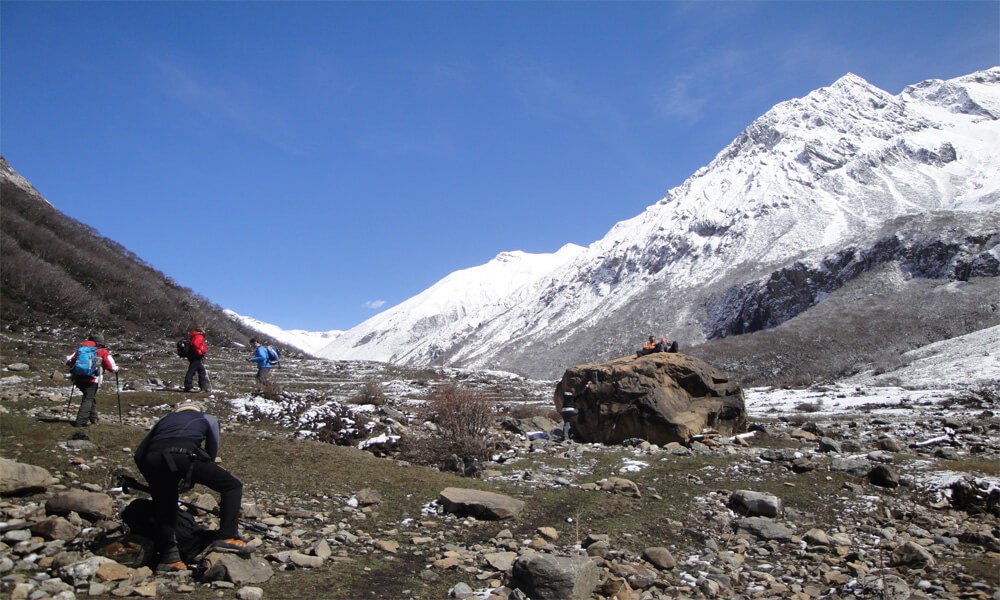
The trail can be slippery sometimes. If it is rainy, walking paths in lower regions will be slippery, and there will be icy snow in the higher regions from Samdo to Dharmasala and Dharmashala to Bhimtang, including the descent from the top. If it is slippery in lower areas due to the wet floor, walk carefully from the safe sides and use crampons for the icy trails in the high altitudes.
If you are on the trek in November and December, walking trails might be covered with ice and dust on the top, which can’t be seen easily. Be sure to check if there is ice underneath on your walking trail. The guide will inform you about those areas during the daily regular trip briefing.
I suggest not going closer to the stream and waterfalls because the stones might be covered with ice that you can’t see properly. If you step on the icy stones, you may fall. So stay safe, follow the guide’s instructions, and don’t hide anything you feel uneasy about; you will be safe and complete the trip successfully.
Essential Equipment to Pack for the Trek
Having enough good-quality gear is essential for a successful trek. Warm, reliable equipment keeps you comfortable and helps lower the risk of altitude sickness, pneumonia, accidents, and other problems.
I recommend packing enough proper clothing, waterproof hiking boots, warm socks, gloves, a sunhat, a winter hat, and any other necessary items.
I also strongly suggest bringing a warm sleeping bag rated for at least -20 degrees, so you stay comfortable and warm in the lodges.
You can buy toilet paper and tissues at the lodges, but they don’t provide towels for showers. Bring a lightweight, quick-dry towel. Also, don’t forget any regular medication you use at home.
Please read the blog post about the equipment to pack for Manaslu Circuit, which has detailed information and will be beneficial for managing the gear.
Accommodation, Food, and Drinks During the Trek
There are plenty of lodges and guesthouses in the trekking route of the Manaslu Circuit. Trekkers do not have to carry tents to sleep. The lodges have twin-sharing beds with a bathroom outside; still, there are rooms with attached toilets in some places.
Guesthouses provide one blanket for each bed and have a pillow with a clean bed sheet. You do not have to share accommodation with strangers during the trek.
As I mentioned about accommodation and not needing to bring tents, the lodges have a food menu, and you can choose a meal course from the menu at every place. It means you do not have to bring food, but do not expect the food as you get in city restaurants. Bring some energy bars, nuts, and snacks for the trail between breakfast and lunch and altitude practice hikes.
You can buy hot drinks, soft drinks, and water in the teahouses and along the way from the shops and little restaurants. You can also purify water using tablets or other methods by filling your bottle from the tap, which will be cheaper than buying bottled water.
Book Your Trek Now and Pay Later
If you’re interested in booking this trip after reading the information above, Frolic Adventure is happy to discuss custom trips, pricing, and more. You can reserve your spot now with a 10% deposit and pay the rest when you arrive in Kathmandu.
Frolic Adventure operates the Manaslu Adventure with professional, government-authorized license-holder English-speaking guides at a reasonable cost.
Most Important Frequently Asked Questions (FAQs)
Why is the Manaslu Circuit a restricted area?
The government limits access to preserve Tibetan Buddhist culture, protect wildlife, and maintain border security. Fortunately, Frolic Adventure handles all mandatory restricted area permits for you, ensuring a seamless and fully legal trekking experience.
Do I need a guide for the Manaslu Trek?
Yes, a licensed guide is legally required for this restricted region. Frolic Adventure provides professional, government-authorized, English-speaking guides to ensure your safety, manage logistics, and enrich your Himalayan adventure.
How difficult is the Manaslu Circuit?
It is a moderate to challenging trek reaching 5,106 meters at Larkya La Pass. It requires good fitness. Our expert guides at Frolic Adventure carefully pace the itinerary to help you acclimatize and safely conquer the pass.
What is the best time to trek Manaslu?
Autumn offers crystal-clear skies, while spring features blooming rhododendrons. Both seasons are stunning. Frolic Adventure operates year-round, but we highly recommend booking your autumn or spring trip with us for the safest, most breathtaking views.
Can solo trekkers do the Manaslu Circuit?
Yes! Starting March 2026, solo trekkers can obtain permits. You still need a guide, and Frolic Adventure is fully equipped to arrange your single-trekker permits and customize an itinerary for a safe, unforgettable solo journey.
What permits are required?
You need a Restricted Area Permit, a Manaslu Conservation Area permit, and an Annapurna Conservation Area permit. Frolic Adventure takes the hassle out of this by securing all necessary permits as part of our all-inclusive trekking packages.
How much does the Manaslu trek package cost?
Frolic Adventure offers a comprehensive 14-day package starting at $1190 for a single trekker, covering permits, accommodation, meals, transport, and a city tour. We also offer excellent group discounts, dropping prices down to $1050 per person!